How Does Induction Cooking Work? Try the Magnet Test With Kids
A simple kitchen experiment that helps kids see how magnetism, electricity, and cooking connect.
Here’s a fun one to try with a kid the next time you’re in the kitchen: grab a fridge magnet and see if it sticks to the bottom of your pots and pans. Some will. Some won’t. That simple magnet test gives you the first clue to why certain pans work on an induction burner—and opens the door to some fascinating kitchen science.
Safety first: Do the magnet test with cool cookware away from the burner. An adult should inspect the magnet before and after the activity, and small or high-powered magnets should not be used with young children.
STEAM at a glance
- Science: Magnetism, electrical currents, resistance, and heat transfer
- Technology: Induction cooking equipment
- Engineering: Coils, sensors, and safety controls
- Art: Using heat to create and change food
- Math: Measuring temperature, time, and volume

I’m a little biased here — induction burners are one of my favorite tools for cooking with kids, mobile classes, or anywhere you don’t want an open flame in the mix. Induction heats quickly. There is no open flame or traditional heating element beneath the pan. However, the hot cookware transfers heat back to the glass, so the cooking surface can remain hot after use. Induction burners are my choice for demonstrations every time, especially if there is a tight time constraint.
Safety note: It’s important to remember that the pan and the glass beneath it can become hot from heat transfer, so students should treat the area as hot until an adult says it is safe.

✔ The cooktop heats and cools quickly
✔ There’s no open flame
✔ Huge classroom-safety advantage, in my opinion
✔ Reduces wait times and keeps activities moving.
✔ Energy-efficient
✔ Perfect for science demonstrations
✔ Kids can see and measure results quickly
✔ Portable and easy to clean
What Exactly Is Induction Cooking?
The Magnetic Science Under the Glass
Traditional stoves heat a pan from the outside. Induction flips this entirely.
A regular stove heats your pan from the outside — a burner gets hot, and that heat transfers into the pan. Induction flips that completely. Underneath the glass cooktop is a copper coil, and when electricity runs through it, it creates a rapidly changing magnetic field. That field passes straight through the glass without heating it at all.

STEAM connection:
This phenomenon is called electromagnetic induction, discovered by Michael Faraday in 1831. It’s the same principle behind electric motors and wireless phone chargers.
But when that magnetic field reaches the right kind of metal, it creates tiny electric currents inside the pan itself — and those currents run into resistance as they move through the metal, which generate is heat, fast. The glass never gets hot on its own; the pan heats itself, essentially, and then transfers warmth back to the glass beneath it (which is why the surface still isn’t something to touch right after cooking).
This is electromagnetic induction — a principle a scientist named Michael Faraday figured out back in 1831, and it’s the same basic idea behind electric motors and the wireless charger your phone might sit on.
Compatible Cookware
Why Only Certain Pots and Pans Work
Induction only works with cookware that has enough iron in it to be magnetic — cast iron, and most (not all) stainless steel. That’s exactly why the fridge-magnet test works: if a magnet sticks firmly to the bottom of a pan, it’ll likely work on an induction burner. No heat, no cooking, no matter how long you leave it on there.
It’s a genuinely satisfying thing to test with a curious kid standing next to you: let them guess which pans will heat up before you try them, based on the magnet test alone.
Of course, you will do the magnet test on a cool pan.


“If a magnet sticks to the bottom of the cookware, it’ll work on the induction burner.“
~ Herbie Root
STEAM explanation:
A traditional electric burner becomes hot and then transfers that heat into the pan. Induction works differently. Beneath the glass cooktop is a coil carrying an alternating electric current. This creates a changing magnetic field.
When compatible cookware is placed over the coil, that magnetic field induces electrical currents in the metal. The metal resists the movement of those currents, and electrical energy is converted into heat inside the cookware. The pan then heats the food—and transfers some of its heat back to the glass beneath it.
That is why an induction cooktop does not directly heat its glass surface in the same way a traditional electric element does, but the glass can still become hot enough to burn someone after cooking.
If a pan isn’t magnetic?
There’s nowhere for those currents to form. No heat. No cooking.
Bring STEAM Into Your
Kitchen
Induction burners give teachers and parents a powerful learning tool
without adding an open flame to the cooking station.
Whether your students are exploring heat transfer, energy efficiency, or simply learning to cook, induction turns science into something they can predict, measure, observe—and taste.
What you’ll need to try this yourself
- An induction burner — I’ll share my picks below
- At least one induction-ready pot or pan (magnetic stainless steel or cast iron)
- A non-magnetic pan, just for contrast — this is what makes the “wait, why isn’t this one doing anything” moment land
- A fridge magnet
- Silicone oven mitts — the pan and the glass under it still get hot from the food, even without a flame
My picks, if you’re shopping for one
For most home kitchens or a simple demo setup, a single induction burner is plenty — compact, easy to store, and plenty powerful for real cooking, not just tricks. I like the Duxtop 1800W Portable Induction Cooktop for this; it heats quickly and wipes clean in seconds.
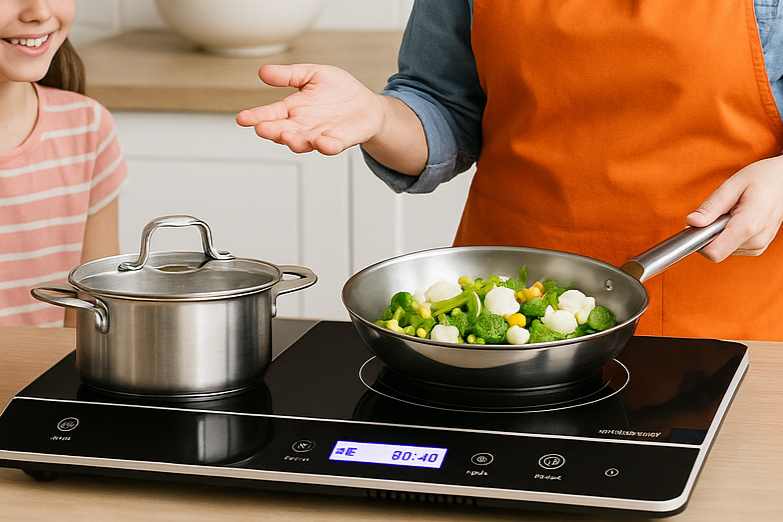
If you’re running a co-op class, a cooking club, or just want to compare two pans side-by-side, a double burner is worth it — I use the Duxtop LCD Portable Double Induction Countertop for exactly that, since it lets you cook (or test) two things at once.
If you want to take this further
This pairs naturally with my “Why Does Pasta Water Go Crazy?” post — one’s about what happens inside the pot, this one’s about how the heat gets into the pot in the first place. If you’re teaching a group and want something more structured than “let’s test some pans,” I’m working on a done-for-you classroom sheet for this one too.
Hands-On Learning for Grades 3–7
Activity 1 — The Magnet Test Station
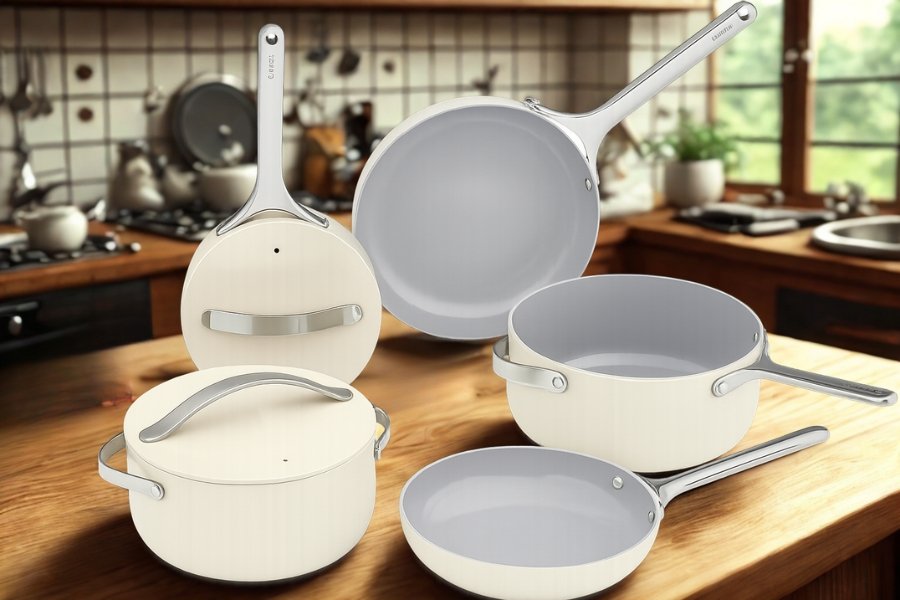
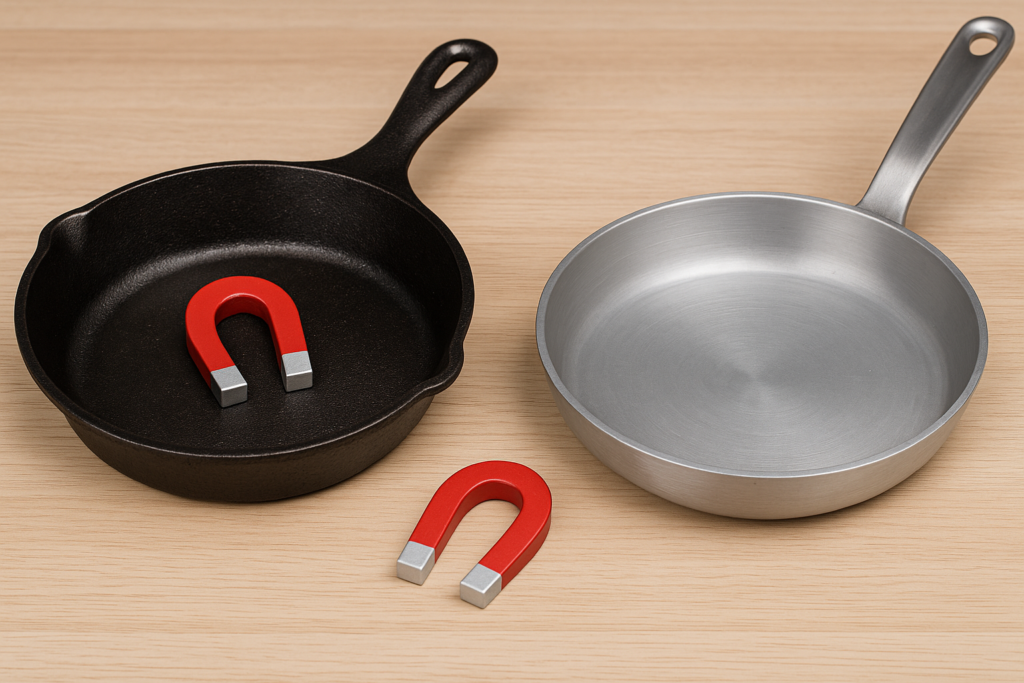
- Students explore:
- Different pan materials
- Thickness and heat distribution
- Why the
non-magnetic
pan does nothing
Turning Cooking into a Real-World Math Lesson
Cooking is full of measurable variables that teachers can use for applied math:
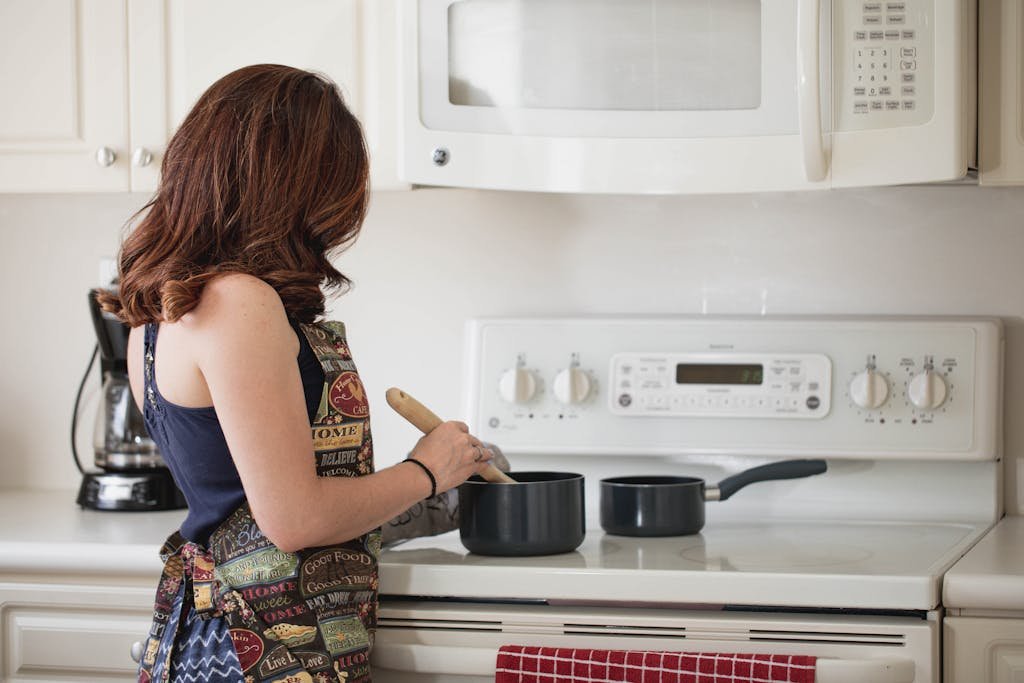
- How long does water take to reach 212°F where you live?
- How does the time differ using different cookware materials?
- How fast can water reach a rolling boil?
Safety Guidelines for Classroom Use
Essential Prep for Teachers
Before running any demo:
- The adult operates the burner during the heat experiment.
- Establish a safe observation boundary.
- Keep the burner away from the table edge.
- Treat the pan and glass beneath it as hot.
- Follow the manufacturer’s instructions.
- Test the burner in advance
- Use only induction-compatible pans
- Supervise boiling water closely
- Keep cords taped or secured and out of walkways
- Allow pans to cool before touching
- Avoid chipped or damaged nonstick cookware
- Never heat an empty pan for the demonstration.
Induction is safer,
but still powerful.
Treat it with respect.
How to Choose a Classroom-Safe Induction Burner
I recommend you look for the following when buying an induction burner to add to your classroom tools:
- Automatic shutoff
- Child locks
- Clearly labeled temperature controls
- Broad temperature range (140°F–450°F is ideal)
- Flat, easy-clean design
- Certifications: UL or ETL
Classroom Setup: My Induction Burner Picks
I look for tools that are practical, portable, easy to supervise, and easy to clean. Induction burners allow students to see real cooking science in action without using an open flame.
For most teachers and parents, a single induction burner will be suitable. It is easier to store, ideal for a mobile set-up, and perfect for demonstrations, small-group lessons, and simple recipes.
For larger groups, cooking clubs, or co-op classes, a double induction burner can be helpful because it allows you to cook two items at once or compare two pans side by side. This works especially well for STEAM lessons where students are observing, timing, measuring, and comparing what happens.
Here are the two classroom-friendly options to consider:
Single Induction Burner
For a single-burner classroom setup, I would recommend this portable induction cooktop because of how quickly it heats, how easy it is to wipe clean, and how simple it is to use once you understand the settings. It is compact enough for a classroom demo table, a homeschool kitchen co-op lesson, or a mobile cooking setup, yet powerful enough for real cooking tasks like quickly boiling water, heating soup, making simple skillet recipes, or demonstrating how induction cooking works.
Make sure you are familiar with the product and settings before using it in a classroom setting.
As an Amazon Associate, I earn from qualifying purchases.

As an Amazon Associate, I earn from qualifying purchases.
Double Induction Burner
Best for: co-ops, cooking clubs, larger classes, and lessons where you want to cook or compare two things at the same time.
Why I like it: more flexibility for recipes, side-by-side experiments, and group cooking lessons.

Safety note: Induction burners do not use an open flame, but the cookware and the glass surface under the pan can still become hot. Always use adult supervision, silicone oven mitts, clear kitchen communication, and a designated cooking station.

If you need a small induction-compatible pan for demonstrations, this 1.6-quart saucepan is one option to consider.

As an Amazon Associate, I earn from qualifying purchases.
The magnet test takes only a few minutes, but it gives children a visible starting point for understanding something they cannot see: the connection between electricity, magnetism, and heat.
Begin with cool cookware and an unplugged burner. Let students predict, test, and record what they discover. Then, if you continue with a heating demonstration, keep the burner and hot cookware under adult control.
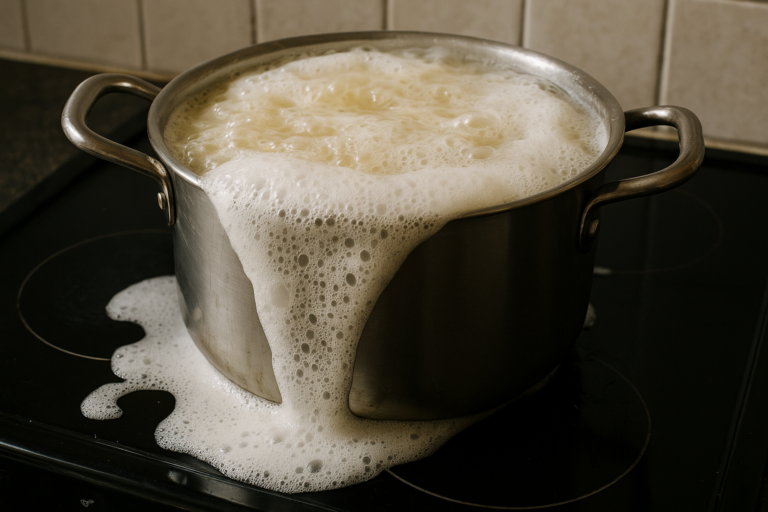
Want to keep exploring the science inside the pot? Read “Why Does Pasta Water Go Crazy?” to discover why starchy water foams and boils over.
For further exploration, visit U.S. Department of Energy.