10 Reasons Kids Should Learn to Cook Before Age 10
It may be hard to imagine when they’re still asking you to cut their pancakes or squeeze the ketchup out of the bottle, but eventually your child will be a teenager, a college student, a young adult—and perhaps a parent feeding your grandchildren.
Knowing how to cook is one of those life skills that can be carried through generations.
That doesn’t mean every 10-year-old should be able to prepare an entire gourmet dinner. Age 10 isn’t a deadline, and children don’t suddenly become kitchen-ready when they reach a certain birthday. What you have to evaluate is maturity, coordination, and the ability to follow safety instructions. Some kiddos develop these things earlier than others.
But by the time children approach the preteen years, they can be building real kitchen competence.
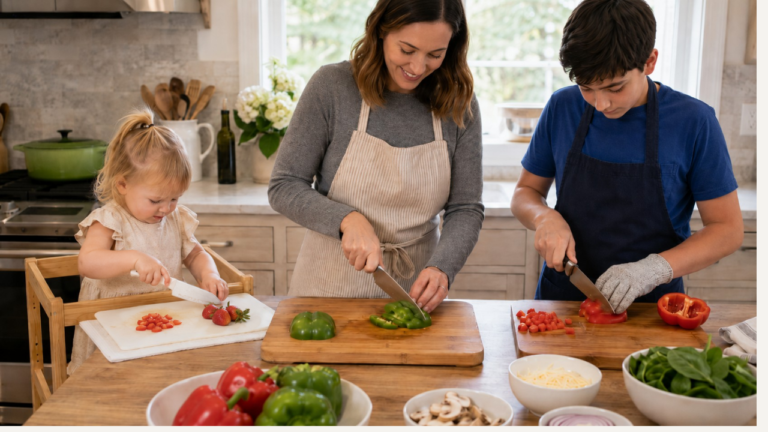
The Academy of Nutrition and Dietetics notes that many children ages 9–12 can, with adult supervision, follow recipes, measure ingredients, boil pasta, simmer foods, bake, and slice or chop vegetables—provided they have first demonstrated that they can follow basic kitchen safety rules.
The goal is to encourage them to develop kitchen confidence as early as possible, one skill at a time.
1. Cooking teaches children how to feed themselves
We spend years teaching children skills they will need as adults. We teach them to read. We teach them how to manage their belongings. We teach them to cross a street, wash their clothes, clean up after themselves and eventually drive a car.
Feeding themselves belongs on
that list.
Storytime: I was invited to teach a kids cooking class at a middle school one morning. It was for a small group of kids and their moms. The recipe for that class was Breakfast Burritos.
As with every other cooking class, each workstation was set up before students arrived, and that included the ingredients to be used in the recipe.
I gave the class a short nutrition chat; we reviewed the recipe and instructions, and I told them to ask me if anyone had questions. Then, I walked from table to table.
At one workstation, there was a boy who was 12 or 13 years old. His mom appeared to be in her mid-30s.
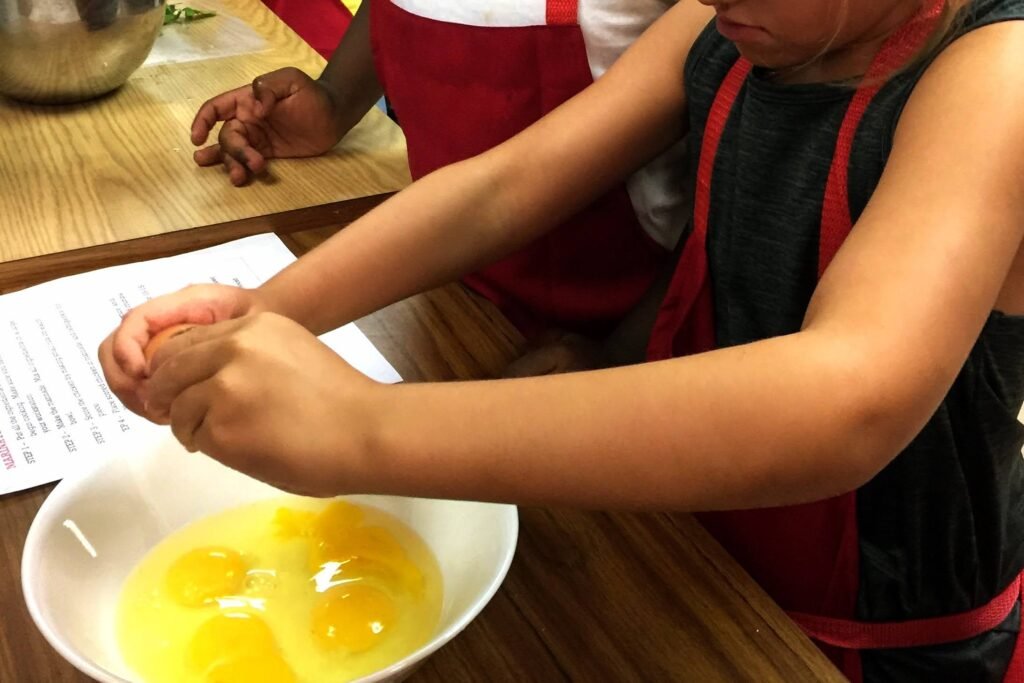
There was a moment when I felt like the mom, and I glitched at the exact same time. The instructions on the recipe told her to mix the eggs in the bowl.
This mom stood before me with an egg in her hand, not knowing how to get the contents of the egg into the bowl.
I had to take a breath and fix my face. I was there to help. So I explained how to do it and then demonstrated how to crack the first egg. She had to do the second one.
I always bring extra eggs to class because there will be messy first tries, no doubt, until someone gets the hang of cracking an egg.
We went through four more eggs until she got it on her own.
Note to anyone who is wondering if they should start a business teaching kids to cook: It is needed. It is important, and a lot of the time it is not just the kids that are learning.
That story has lived in my head rent-free for over a decade.
I was gobsmacked. I simply could not help but wonder what her story was. She had never cracked an egg in her life.
My brain jumped to so many conclusions.
If she truly had never cracked an egg, that would mean that she had never made an omelet, scrambled eggs, or a birthday cake.
Did her mom not allow her in the kitchen? My heart broke a little.
How many generations back can we go to find the last person to crack an egg?
Knowing how to make a few breakfasts, prepare simple lunches, cook basic meals and safely use common kitchen tools can give kids options later in life that they simply won’t have if we never teach them.
I saw that firsthand.
This is why helping in the kitchen is so important from the very beginning.
Learning how to cook is the goal.
2. Confidence grows because competence grows
We want children to feel confident in the kitchen, but confidence isn’t something we can simply hand them.
It develops through little successes.
First, they pour.
Then they measure.
Then they crack the egg without it being crushed or smashed.
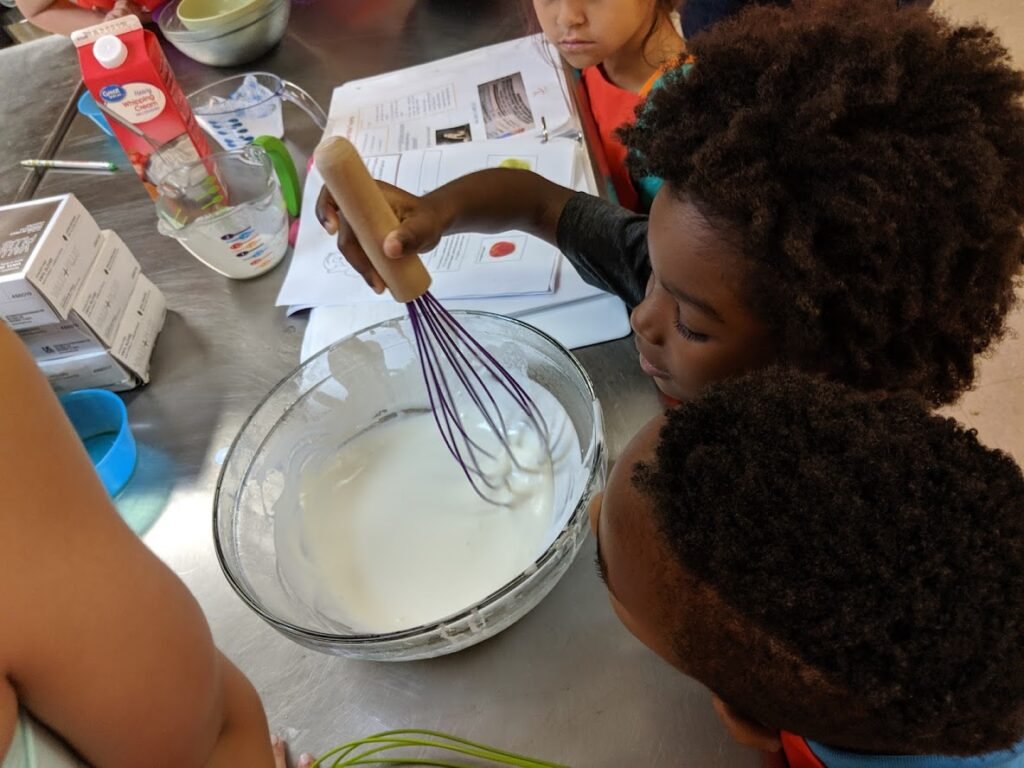
They learn how to whisk, peel, chop, or use an appliance.
Eventually, several little skills come together, and they make something.
And there is a big difference between telling a child, “You can do it!” and watching that child realize:
“I did it.”
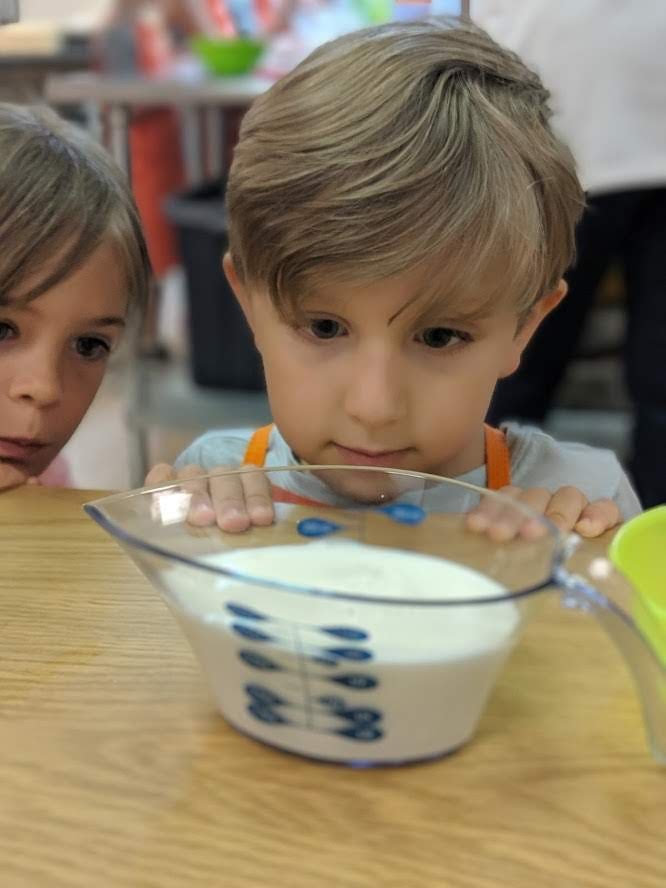
Research supports this. A 2024 systematic review and meta-analysis examined 21 studies of school-based cooking programs for children ages 4–12. The researchers found small but measurable improvements in children’s cooking self-efficacy—their confidence in their own ability to cook.
Programs that included more than six hours of cooking instruction showed the greatest effects.
That finding makes sense.
One afternoon in the kitchen can be fun.
Repeated practice builds a confident kid who can cook.
3. Children become familiar with real food
I remember a mom dropping off her 5-year-old on the first day of cooking camp. As she walked out the door, I heard her laugh and say to another mom, “Good luck getting my kid to eat anything green.”
Challenge accepted.
By the end of the four-day camp, her son was drinking green smoothies and showed his mom that he could eat baby spinach out of a bag.
Do I have a superpower? I don’t think so. Was it something about a group dynamic? Maybe.
Or maybe it was just working with real food in a real kitchen and logic.
Another mom approached me the day after a women’s business event where my kids’ cooking business offered a hands-on cooking demonstration with the kiddos, and we made Black Bean quesadillas.
She asked me what I did to her daughter to get her to eat black beans. I was taken aback by this question.
I remembered her daughter telling me that she would participate, but no black beans for her. I chuckled and explained that because we were making black-bean quesadillas, the black beans needed to be part of the recipe. I asked her to try it, and if she truly didn’t care for it she didn’t have to finish the quesadilla. I encouraged her to make the recipe first and then decide what she thought after a no-thank-you bite.
Her mom told me that her daughter not only liked it, but she wrapped up half of the quesadilla so she could have it for lunch the following day. (Sigh of relief… I thought I had done something to offend the mom).
4. Children may be more willing to eat foods they help prepare
I once taught a preschool student with special needs who, because of texture sensitivities, did not eat fruits or vegetables. During the first few classes, he watched as the other children cut bananas, strawberries, and oranges. Eventually, he felt comfortable enough to join them—but eating what he had prepared was still too much.
Then I wondered: What if we changed the texture? His mom told me that he would eat yogurt, and to him that was a safe food.
He helped put the fruit into a blender with yogurt, pressed the buttons, and proudly poured his special smoothie for everyone to try. The other children liked it, but he still hesitated.
Until he took a little taste.
And he liked it.
His mother had tears in her eyes. It was the first time her son had eaten fruit—orange, strawberry, and banana, to be exact.
That was a good feeling, but a different kind of super Power was involved. I could not have done that on my own.
Sometimes becoming familiar with food does not begin with taking a bite. It begins with touching it, cutting it, watching it change, and discovering a texture that feels manageable.
When it comes to getting familiar with food, you might have to think outside the box! Pardon the pun.
You might have to remind your finicky eater that before an onion becomes part of spaghetti sauce, it’s an onion.
It has papery skin. It has layers. It smells different after it’s cut. It becomes softer and sweeter as it cooks.
Before broccoli lands on a dinner plate, a child can wash it, break it into florets, season it, and watch what happens to it when heat is applied.
Some kids don’t like raw broccoli, but have never tried steamed broccoli.
Some have reported being served broccoli that is mushy. Overcooking broccoli is a tragedy.
I had to show kids how to make steamed broccoli. They were amazed to see that the color becomes brilliant green, and the texture changes. It didn’t taste like a tree, nor did it look like sludge.
The broccoli was just right. (I feel like there is a STEAM lesson in there somewhere).
Cooking lets children experiment with food before it becomes a finished meal.
They touch it.
Smell it.
Measure it.
Cut it.
Mix it.
Watch as the heat changes it.
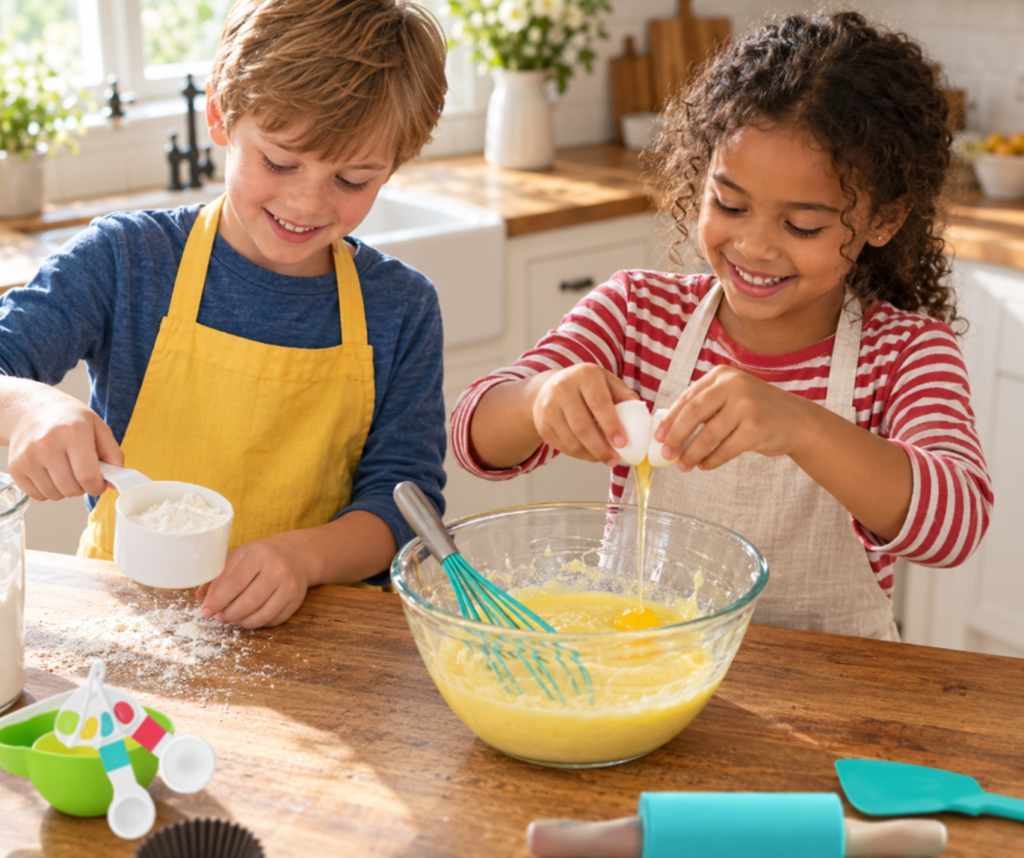
That is food literacy in a very practical form.
The American Academy of Pediatrics points out that cooking exposes children to the sensory qualities of foods while naturally incorporating math, measurement, fractions, vocabulary, science, planning, and following a process from beginning to end.
To that list, I would add timing, temperature, cross-contamination, socializing, building confidence and self-esteem.
A kitchen is quite a classroom when you stop and think about it.
Most parents who have cooked with children have probably experienced some version of this:
The child who wouldn’t touch the vegetable at dinner is suddenly nibbling pieces of it while helping prepare the meal.
That doesn’t mean cooking will magically turn every finicky eater into a vegetable lover.
Just like my personal stories above, there is evidence that participation in cooking can make a difference.
The same 2024 systematic review found a small positive effect on children’s vegetable intake in addition to the improvement in cooking confidence.
The American Academy of Pediatrics also recommends giving children repeated, positive experiences with unfamiliar foods. Cooking gives children opportunities to explore food through touching, smelling, washing, tearing, and preparing it even when they aren’t quite ready to taste it yet.
There is something different about being handed ingredients and then being able to say:
“I made this pasta salad! Here! Try it. It’s good!”
Ownership matters.
5. Cooking helps children understand what goes into their food
One of the most valuable lessons we can teach children is surprisingly simple:
You get to know what goes into your food.
When children cook, ingredients aren’t hidden behind a package.
They can see how much sugar went into the muffins.
They learn that a salad dressing is made from ingredients that can be measured and mixed.
They discover that pancakes don’t have to come from a cardboard box.
And they can even be pink, and without using artificial food dyes!
As their skills grow, so does their ability to make choices.
They can eventually identify ingredients on labels that they don’t want in their bodies, and see that they can make their favorite foods taste better with fewer ingredients. They can also learn how to make recipes healthier:
Do I want more garlic?
Can I add another vegetable?
Do I want to use less salt?
What happens if I substitute this ingredient?
Cooking doesn’t guarantee perfect eating habits. What does perfect even look like anyway?
But it gives a child something important:
knowledge and choices.
6. Cooking gives children real responsibility
The kitchen is also one of the best places to learn that what we do matters.
Use a ponytail holder to pull long hair back away from your face.
Wash your hands before you begin.
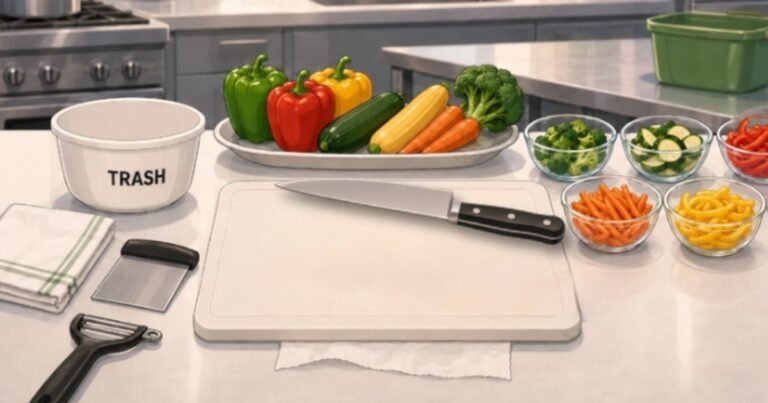
Get your workspace in order, along with the ingredients.
Read the recipe. Twice.
Put the milk back in the refrigerator after you use it.
Clean as you go.
Turn off the appliance.
Don’t leave a spill on the counter or on the floor.
Put tools away where they belong.
The American Academy of Pediatrics recommends age-appropriate household responsibilities because they help children develop life skills, cooperation and self-esteem. It also recommends introducing responsibilities gradually and praising effort rather than expecting perfection while a child is learning.
That fits beautifully in the kitchen.
A child doesn’t need twenty new responsibilities on the first day.
Give one.
Teach it well.
Practice it.
Then add another.
7. Cooking can make “healthy eating” something children actually understand
Children hear plenty of messages about eating healthy food.
Eat your vegetables.
Drink water.
Don’t eat too much sugar.
Choose healthier snacks.
Those ideas become much more meaningful when children actually work with real food.
Instead of simply hearing the words real food or nutrient-dense food, they begin recognizing ingredients and learning what can be done with them.
They learn that dinner doesn’t have to arrive fully assembled.
They learn that a handful of ordinary ingredients can become tacos, an omelet, stir-fry or another family favorite.
Cooking does not guarantee perfect eating habits. What does “perfect” even look like, anyway? But cooking does give children the ability to make a choice other than, “What can I unwrap?”
That’s a powerful skill to carry into adulthood.
8. Cooking can give families more options
Knowing how to cook also changes the way we can shop.
When someone knows what to do with basic ingredients, they aren’t limited to completely prepared meals.
Leftover chicken can become something entirely different tomorrow.
Buying vegetables that are in season can be less expensive, and they can become a side dish or part of another meal.
That doesn’t mean every meal cooked from scratch will always be cheaper than every convenience food. Grocery prices and family circumstances vary far too much for a promise like that.
But cooking skill gives a family more ways to use the food they buy.
And knowing how to use what is already in the refrigerator and pantry is a pretty useful adult skill.
9. Safety should come before independence
There is one important catch to everything I’ve said so far.
We can’t teach independence by handing a child an adult tool and saying, “Be careful.”
Children need to know what careful means.
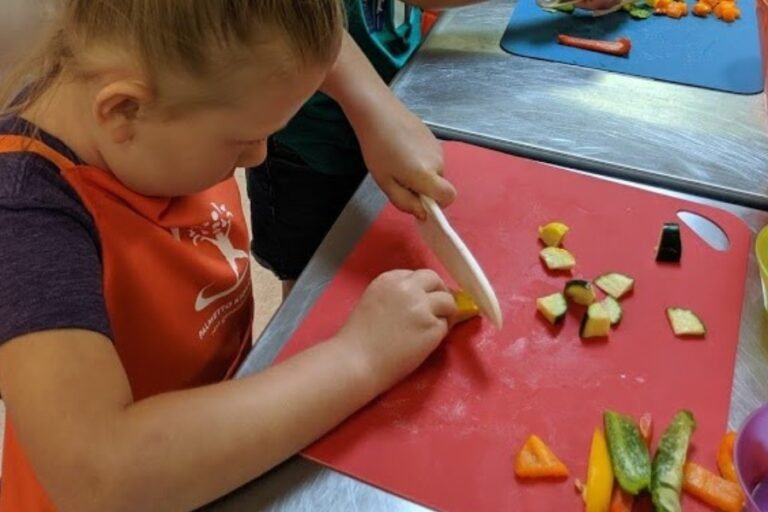
Before knife skills comes knife safety.
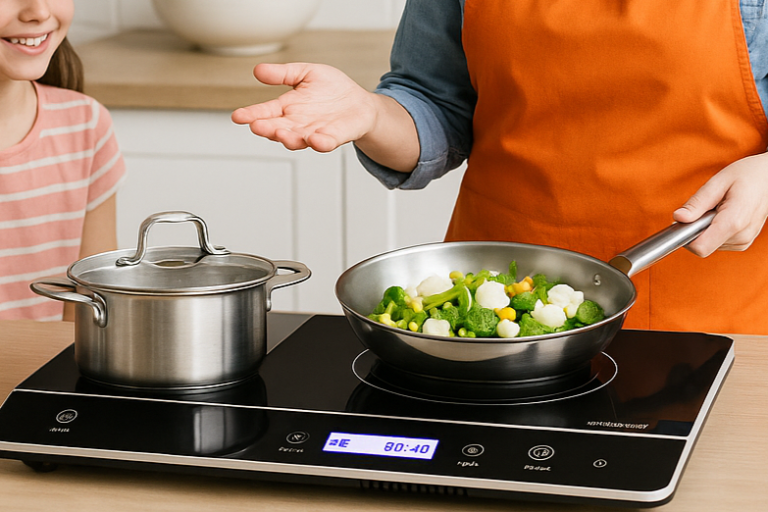
Before using the oven comes learning that heat and possibly steam can rise out of the oven when the oven door is opened. Learning that allows them to let the heat escape the oven before reaching in.
Oven mitts must be completely dry before use. Wet or even slightly damp fabric mitts and potholders can transfer heat quickly and cause burns. Water-resistant silicone mitts can offer additional protection from moisture, but they still need to fit securely and be used correctly. Find these and other kitchen safety products on my Kitchen Picks page.
Before operating an appliance comes learning how to pull your hair back into a ponytail to keep it away from moving parts.
The American Academy of Pediatrics recommends matching cooking jobs to a child’s developmental abilities and supervising children while they perform age-appropriate tasks.
Let children make harmless mistakes. Flour will spill. Eggs will break. Measurements will occasionally be wrong. Pancakes will come out shaped like Louisiana. It’s OK.
We might have to frost a cake that hasn’t had adequate time to cool, and watch as the bunny’s face slides to the side like something from a horror movie. (Yes, that really happened in class).
Those things are part of learning. We made a memory.
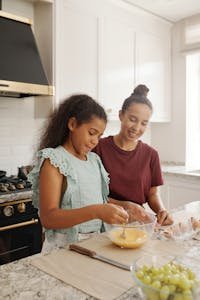

But we can reduce the dangerous mistakes by teaching the safety rules before giving the child responsibility for the tool.
I like to think of it this way:
Independence is earned one skill at a time.
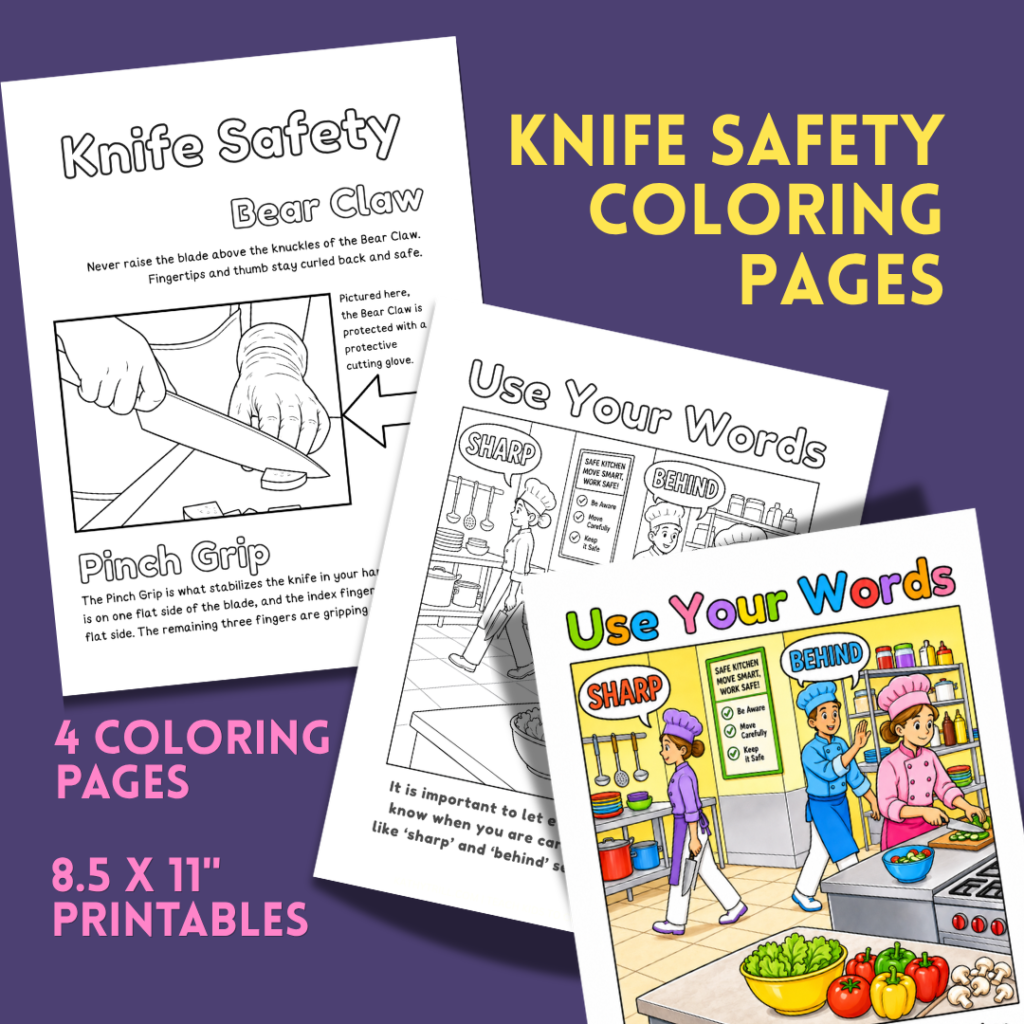
Before knife skills comes knife safety. In Episode 2 of my Teach Kids To Cook – Instructor Series, I explain the safety lessons children need before they begin using a kitchen knife.
This may be my favorite reason of all. When you teach your child how to cook, you aren’t simply teaching them how to make tonight’s dinner.
You may be teaching the future college student who needs to feed themselves on a budget.
You may be teaching the future mother or father who will someday stand at a kitchen counter with an eager little chef beside them like you.
Really.
The American Academy of Pediatrics recognizes cooking together as an opportunity to pass family recipes, traditions, and cultural heritage from one generation to another.
Your child may not remember every lesson you teach.
But they may someday say:
“This is how my mom did it.”
Or:
“My dad taught me how to make this.”
And then they’ll show another little pair of hands what to do.
They may even say:
“I love Black Bean Quesadillas because of this one cooking instructor who changed my mind about black beans.”
Start where your child is
Your 10-year-old does not need to know everything.
Your five-year-old doesn’t need to keep up with someone else’s five-year-old.
Start with the child standing in front of you.
What can they do safely now?
What can you teach next?
Give them a real job. Show them how to do it. Let them practice. Stay close enough to guide them. Then, when they are ready, give them a little more responsibility.
That’s how children move from helping us cook to knowing how to cook.
And someday, when someone hands your child an egg to make a breakfast burrito, he or she will know exactly what to do with it.
That’s the goal.
Ready to give your child a safe start in the kitchen?
Before children begin practicing knife skills, they need to understand the safety rules that protect them. Download my free Knife Safety Companion Coloring Pages for a kid-friendly way to begin the conversation.